المحاضرتان 6 و 7: الوراثة (Inheritance)
الشرح التفصيلي لجميع شرائح المحاضرة (Slide-by-Slide) مدعوم بشرح الأكواد سطراً بسطر (Line-by-Line Code Explanation)
Slide 3: مفهوم الوراثة (What is Inheritance?)
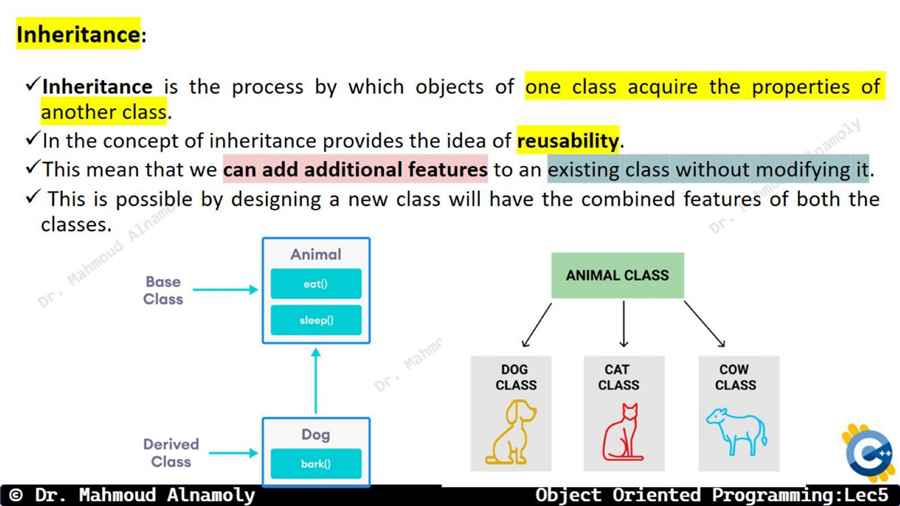
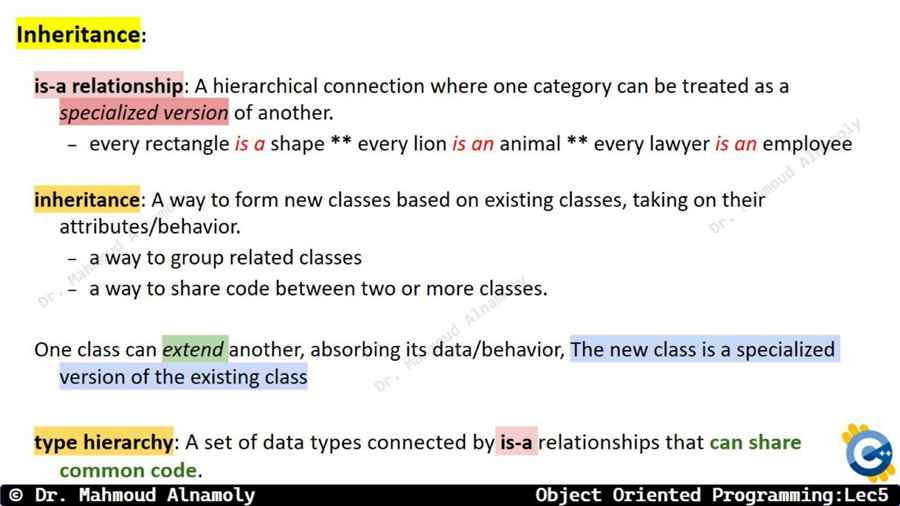
Slide 4: علاقة الـ Is-A (The "Is-A" Relationship)
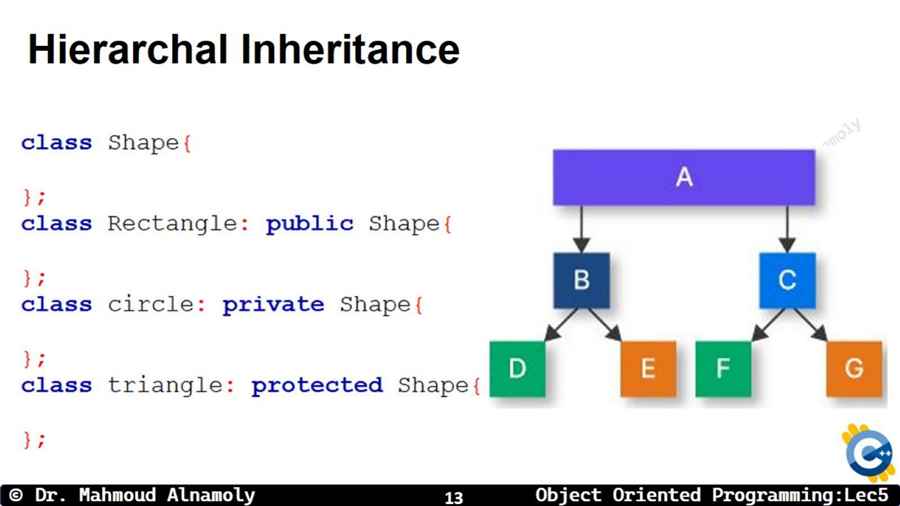
Slide 6: طريقة كتابة الوراثة (Inheritance Syntax)
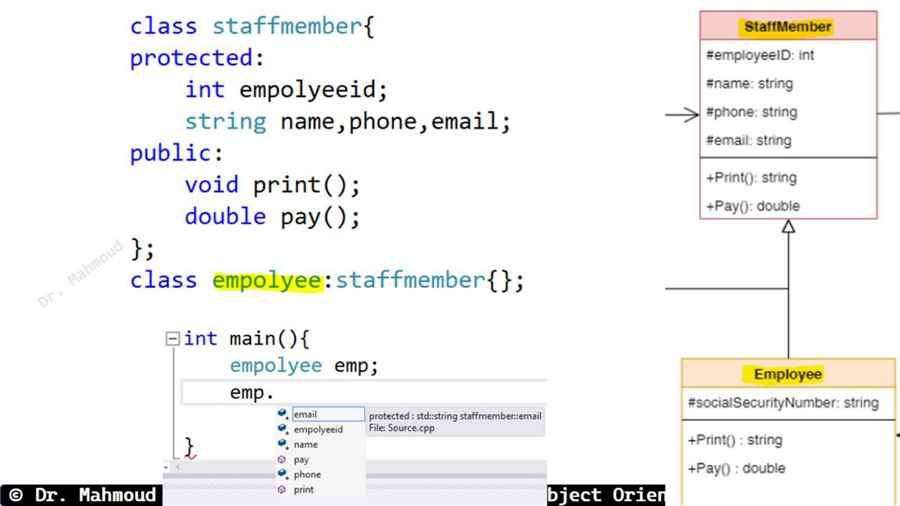
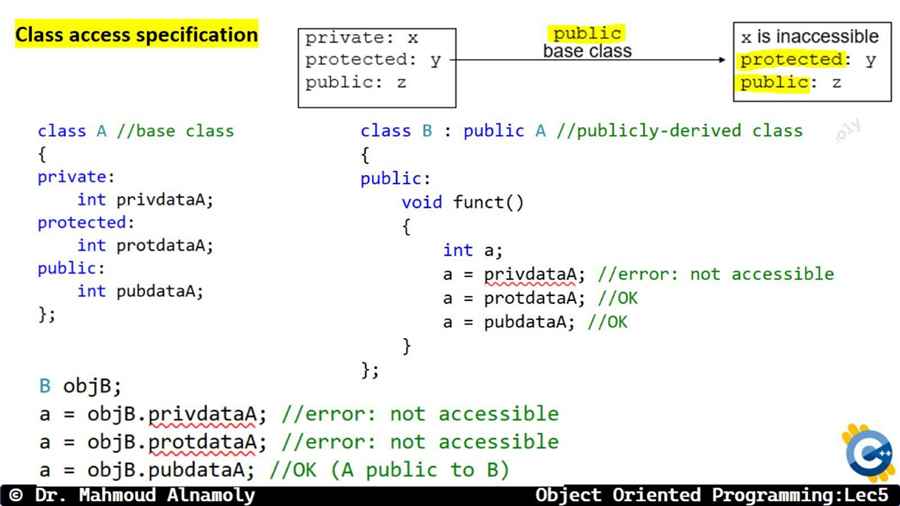
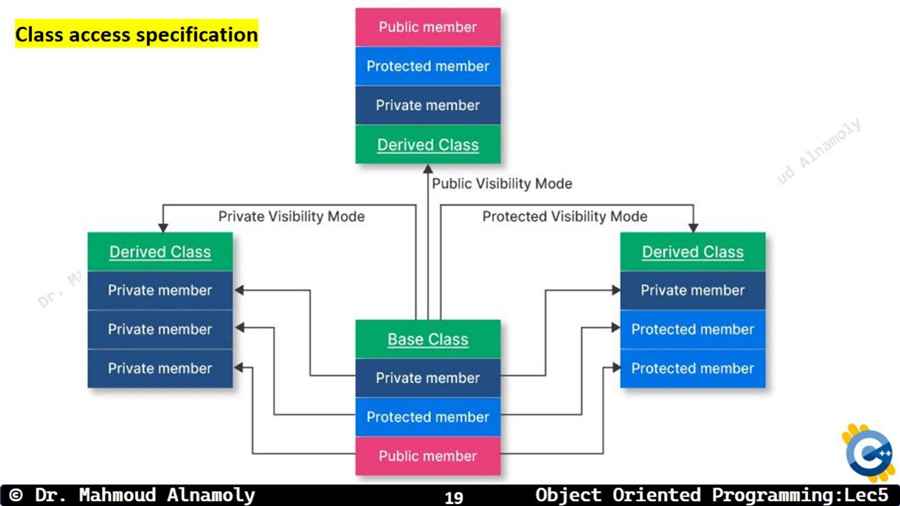
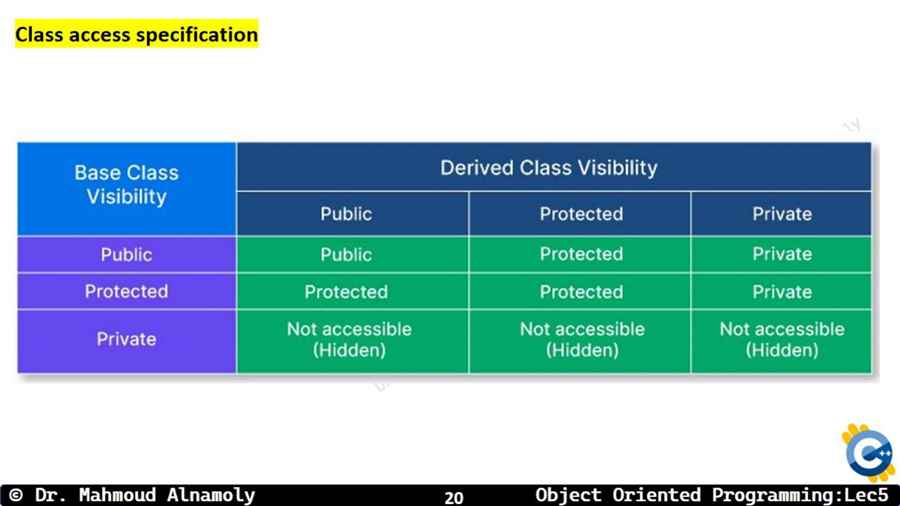
Slide 10: الكلمة السحرية (The 'protected' Access Modifier)
Quiz 1: Inheritance Basics & Protected
1. What is the primary advantage of using Inheritance in OOP?
2. Which access specifier should be used in a Base class if you want the data to be hidden from the `main()` function, but fully accessible to its Derived (child) classes?
Slide 13: ترتيب البناء والهدم في الوراثة (Constructors & Destructors Order)
Slide 16: تمرير المتغيرات لأباء (Passing Arguments to Base Constructor)
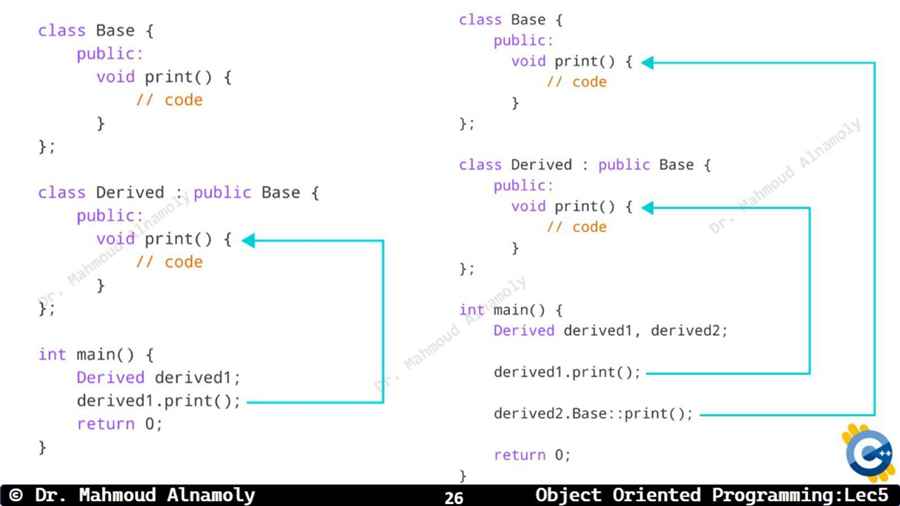
Slide 19: تعدي الدوال (Function Overriding)
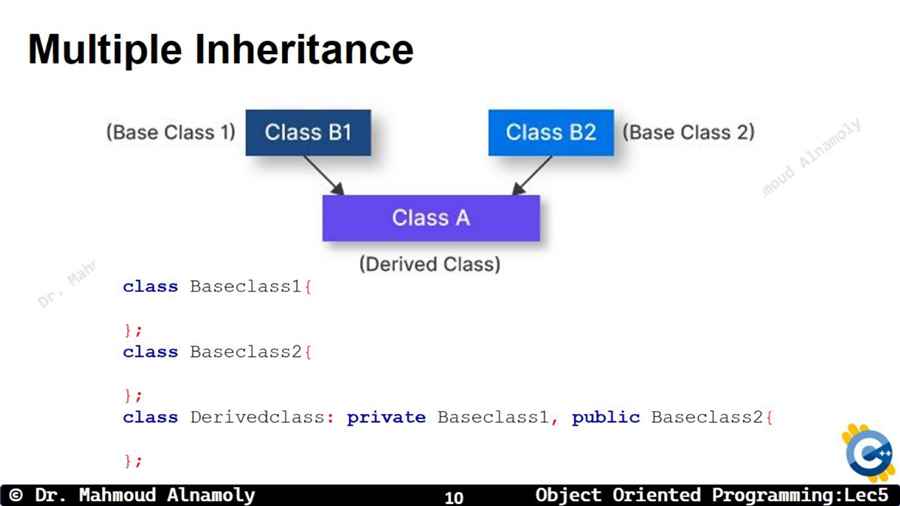
Slide 20: الوراثة المتعددة (Multiple Inheritance)
Slide 25: مشكلة الغموض (Ambiguity in Multiple Inheritance)
Final Quiz: Inheritance Mechanics
1. When creating an object of a Derived class, what is the exact order of execution for Constructors and Destructors?
2. In Multiple Inheritance, if two base classes have a function with the exact same name, and the derived class calls it, an 'Ambiguity Error' occurs. How do you resolve this in C++?
الملخص الشامل لأهم التريكات (Summary & Pro Tips)
- Inheritance = وراثة: كلاس ابن (Derived) بياخد كل خصائص ودوال كلاس أب (Base) ويزود عليها. بنستخدمها لما العلاقة تكون "Is-A".
- Syntax:
class Child : public Parent { };← النقطتين (:) هي اللي بتعمل الوراثة. - protected: مستوى حماية "عائلي" ← مخفي عن الـ main (زي private) بس متاح للأبناء (زي public). ده الأنسب لمتغيرات الأب اللي عايز الابن يوصلها.
- ترتيب البناء: Constructor الأب بيشتغل الأول، وبعدين الابن. الهدم بالعكس (Derived Destructor أولاً ثم Base).
- Initialization List: لو الأب عنده Parameterized Constructor، الابن بيبعتله القيم بـ
Child(int p, int c) : Parent(p) { }. - Overriding: الابن يعمل دالة بنفس اسم ونفس Parameters بتاعة الأب ← دالة الابن بتطغى على دالة الأب.
- Multiple Inheritance: الابن يورث من أكتر من أب:
class C : public A, public B { };. لو في دالة بنفس الاسم في الأبهات بيحصل Ambiguity والحل بالـ Scope Resolutionobj.A::func();.
سؤال مقالي متوقع للامتحان (Essay Question)
Question: Explain the concept of Inheritance in C++. Discuss the `protected` access modifier, the order of Constructor/Destructor calls, how to pass arguments to a Base class constructor, and the Ambiguity problem in Multiple Inheritance with its solution.
🖥️ What is the output of the following code?
Q1:
Q2:
✍️ Write a line of code for the following statements
Q1: Declare a class Dog that inherits publicly from a class Animal.
Q2: Write a Derived constructor that passes value x to the Base constructor using an initialization list.
Q3: Declare a class C that inherits from both A and B (Multiple Inheritance).
🔍 Based on the following code, answer all the following questions
a) What is the output?
b) Why is width declared as protected instead of private?
c) Can we write cout << s.width; in main()?