المحاضرة الثانية: مبادئ الـ OOP
الشرح التفصيلي لجميع شرائح المحاضرة (Slide-by-Slide) مدعوم بشرح الأكواد سطراً بسطر والتريكات الهامة
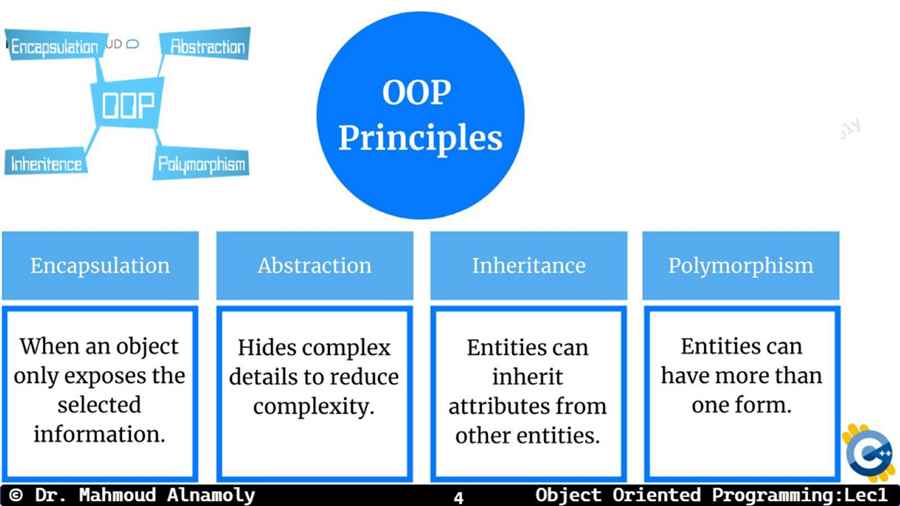
Slide 4: مبادئ الـ OOP الأربعة (OOP Principles)
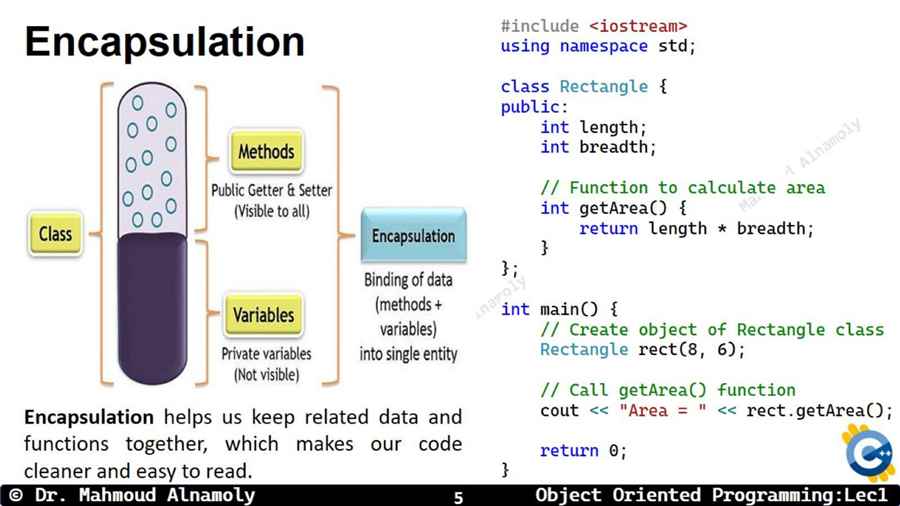
Slide 5: الـ Encapsulation (التغليف)
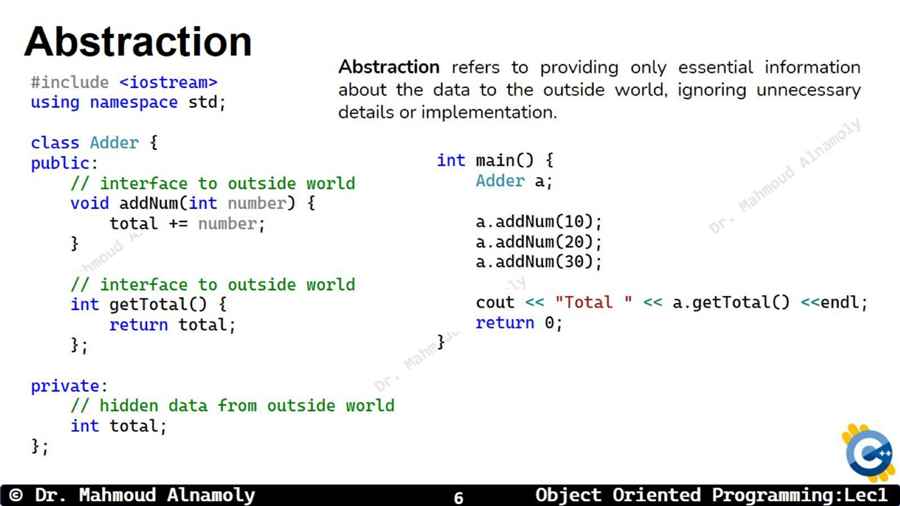
Slide 6: الـ Abstraction (التجريد)
Quiz 1: Encapsulation & Abstraction
1. Which OOP principle is mainly responsible for hiding the internal state (data) and requiring all interaction to be performed through an object's methods?
2. In C++, if no access specifier (public, private, protected) is declared at the beginning of a class, the members are by default:
Slide 7: الـ Inheritance (الوراثة) - الفكرة الأساسية
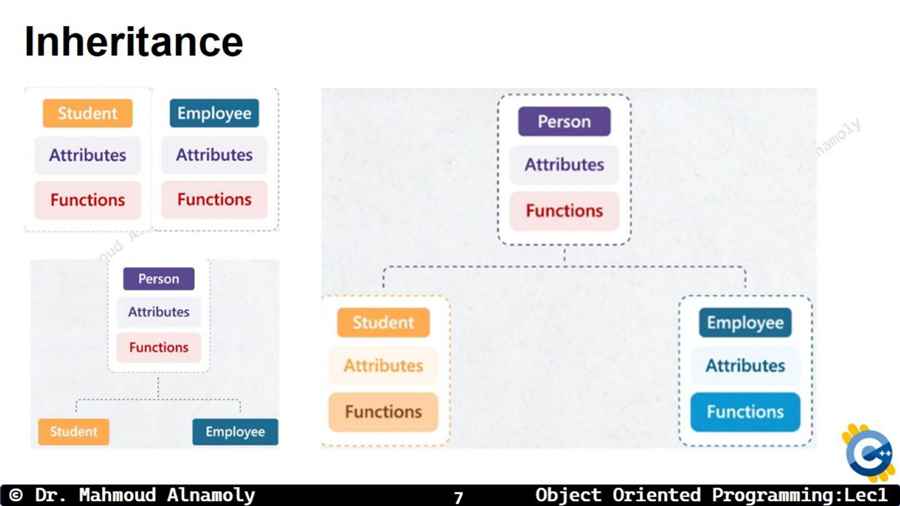
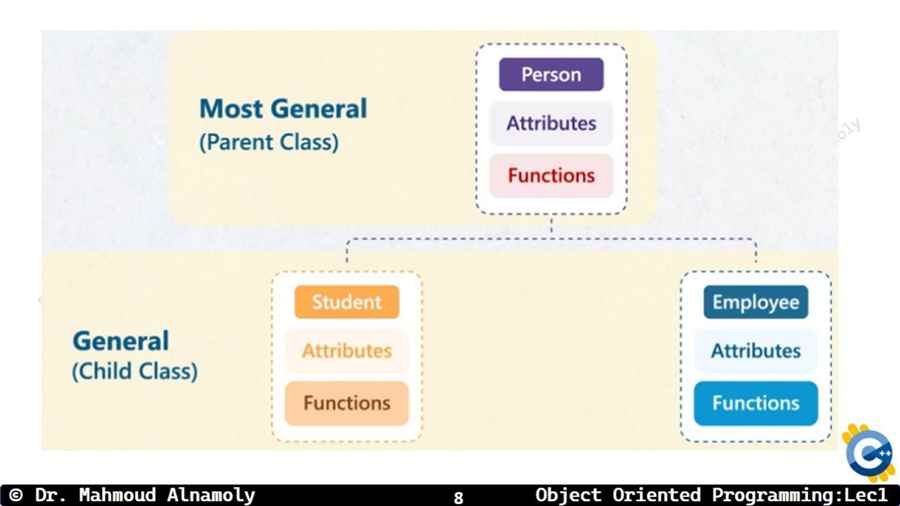
Slide 8: الـ Inheritance - المستويات (Parent & Child)
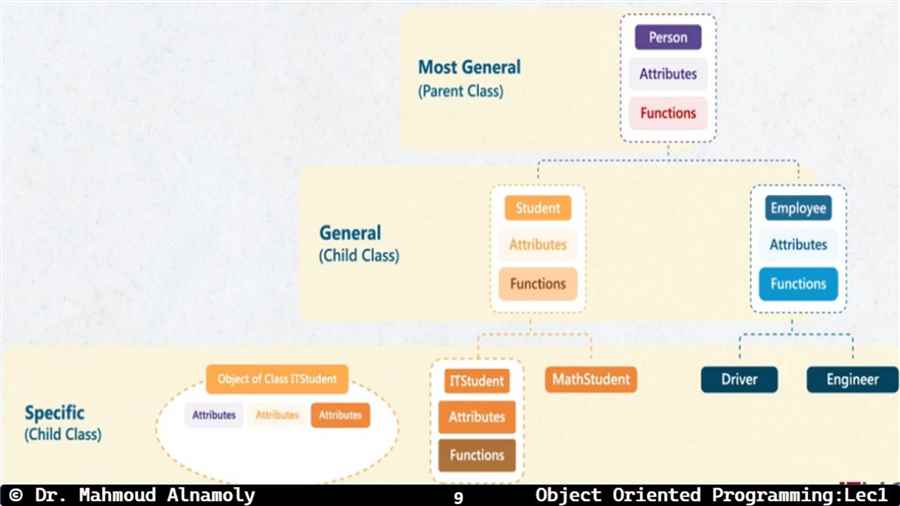
Slide 9: الـ Inheritance - شجرة الوراثة (Inheritance Tree)
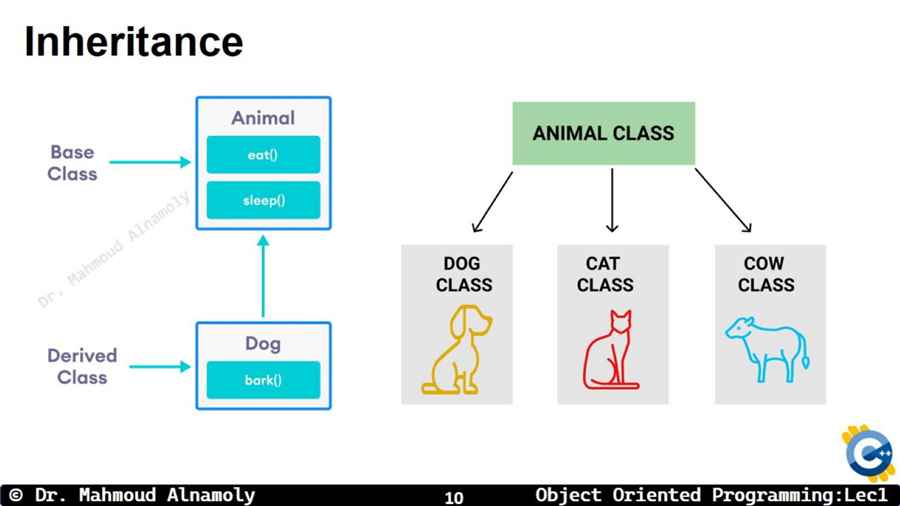
Slide 10: الـ Inheritance - مثال الحيوانات
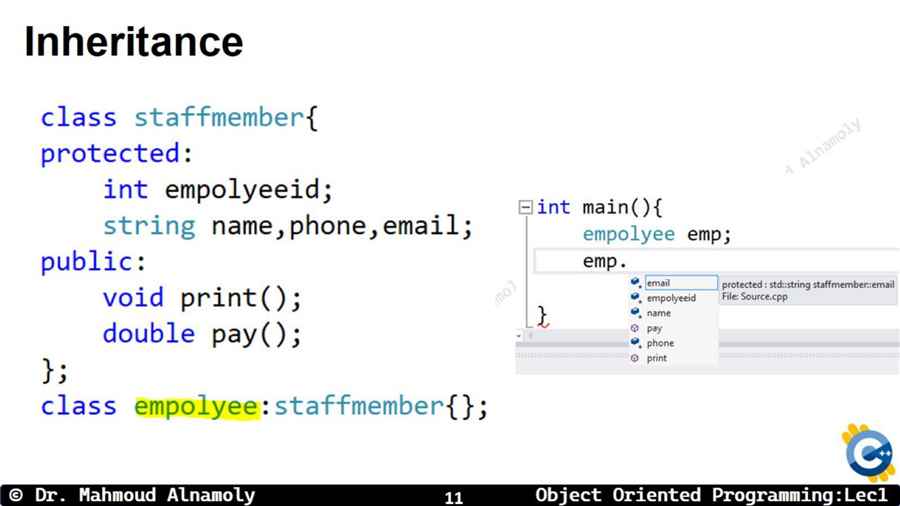
Slide 11: تطبيق الـ Inheritance بالكود (C++)
Quiz 2: Inheritance
1. What access specifier should you use in a base class if you want the data to be hidden from the outside world, but still accessible to derived (child) classes?
2. What is the correct syntax in C++ to make a class 'Dog' inherit publicly from a class 'Animal'?
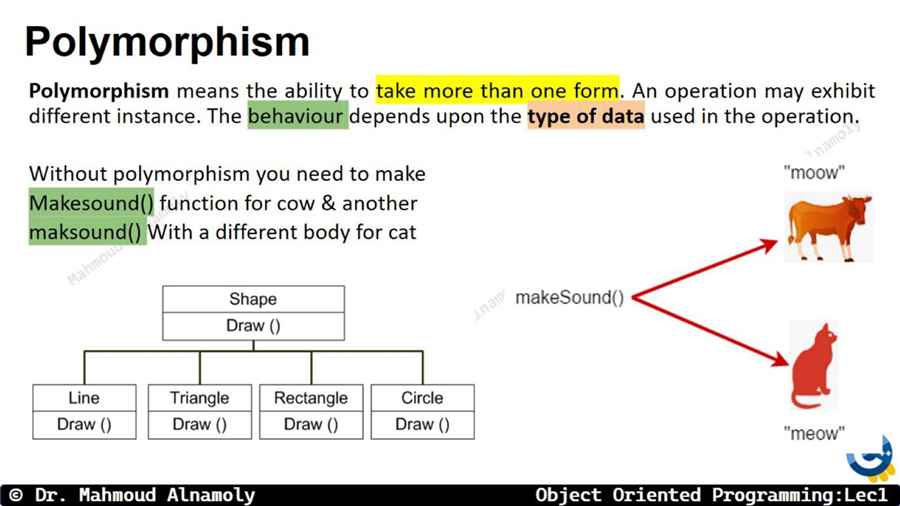
Slide 12: الـ Polymorphism (تعدد الأشكال)
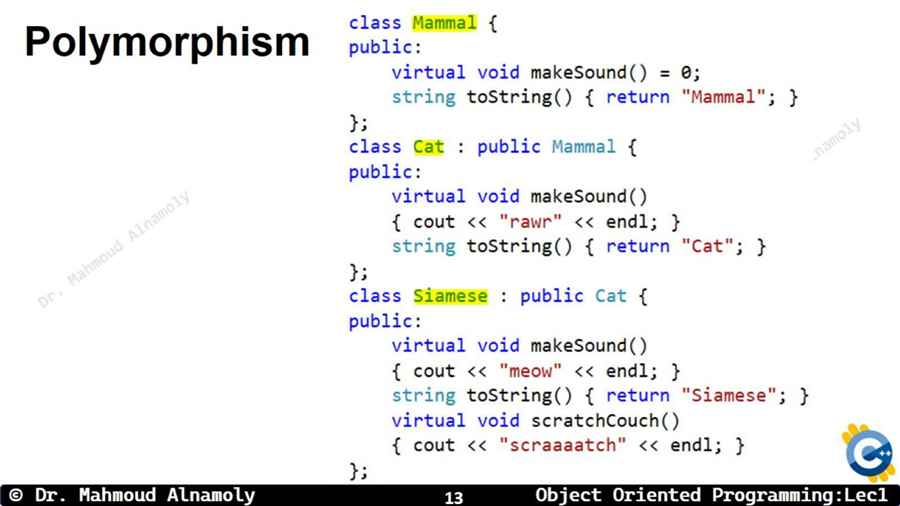
Slide 13: تطبيق الـ Polymorphism بالكود (C++)
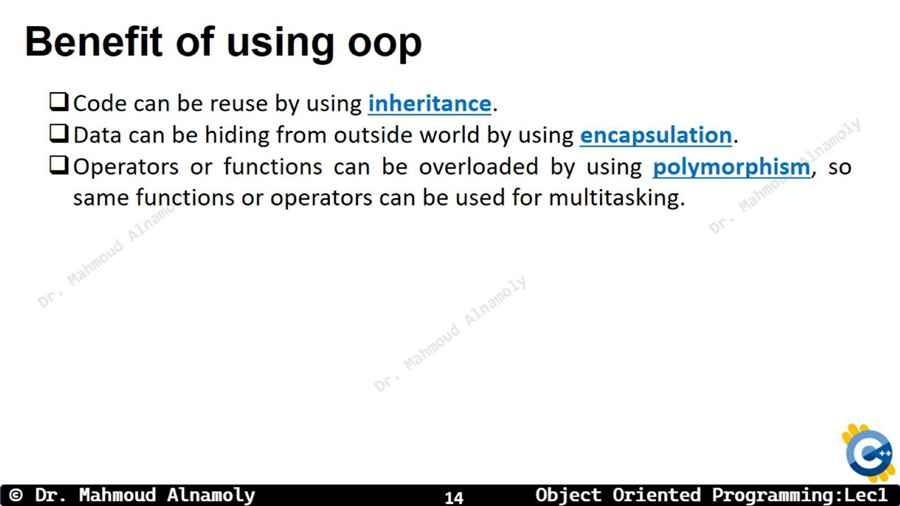
Slide 14: فوائد الـ OOP (Benefits of using OOP)
Quiz 3: Polymorphism & OOP Benefits
1. What keyword in C++ is used in a base class to allow a function to be overridden in a derived class, enabling Polymorphism?
2. If you want to reuse existing code to build a new class with additional features, which OOP principle are you applying?
الملخص الشامل لأهم التريكات (Summary & Pro Tips)
- Encapsulation (الكبسلة): بنحققه في C++ عن طريق استخدام الـ Access Modifiers زي
privateعشان نخفي الداتا، وpublicللدوال اللي بتتعامل معاها. - Abstraction (التجريد): هو إنك تركز على "إيه اللي بيحصل؟" مش "إزاي بيحصل؟". بتعمله عن طريق إخفاء تفاصيل الكود خلف دوال public يقدر اليوزر يستخدمها من غير ما يفهم اللوجيك الداخلي.
- الفرق بين private و protected: الـ
privateمخفي عن أي حد بره الكلاس (حتى أبناءه). لكن الـprotectedمخفي عن العالم الخارجي بس متاح لأي كلاس بيورث منه (Child Class). دي نقطة بتيجي 100% في الامتحان! - الـ Virtual Function: عشان الكومبايلر يفهم إن دي دالة ليها أكتر من شكل (Polymorphism)، لازم تكتب قبلها كلمة
virtualفي الكلاس الأب.
سؤال مقالي متوقع للامتحان (Essay Question)
Question: Briefly define the four main principles of Object-Oriented Programming (OOP). Give a short real-world analogy for each.
🖥️ What is the output of the following code?
Q1:
Q2:
✍️ Write a line of code for the following statements
Q1: Write a setter function called setName that takes a string parameter and assigns it to a private member called name.
Q2: Write a getter function called getAge that returns the value of a private integer member called age.
Q3: Write a setter function with validation: setGrade accepts a float, but only assigns it to member grade if the value is between 0 and 4.
🔍 Based on the following code, answer all the following questions
a) What is the output?
b) What will happen if we call acc.setBalance(-500);?
c) Why is balance declared as private?