المحاضرة 11: التعامل مع الملفات ومعالجة الأخطاء (File I/O & Exception Handling)
الشرح التفصيلي لجميع شرائح المحاضرة (Slide-by-Slide) مدعوم بشرح الأكواد سطراً بسطر (Line-by-Line Code Explanation)
Slide 3: مفهوم التيارات (Introduction to Streams)
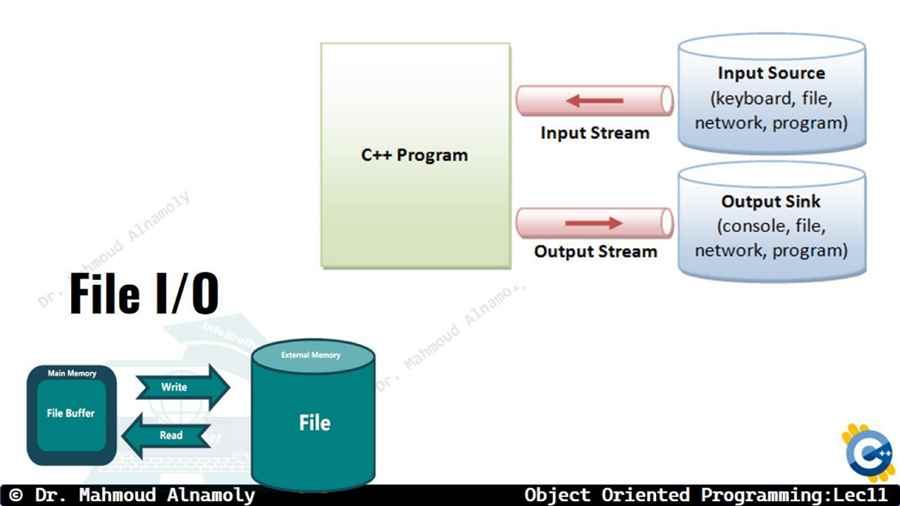
Slide 5: مكتبة التعامل مع الملفات (The 'fstream' Library)
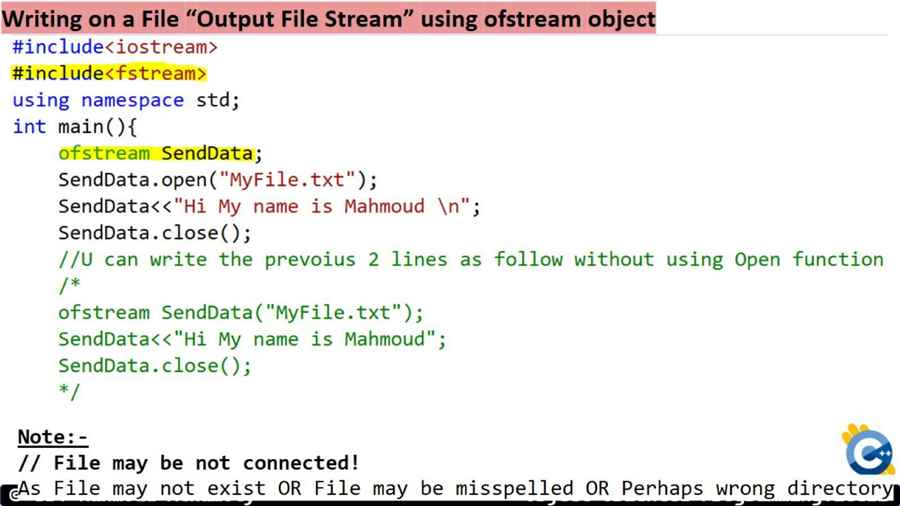
Slide 8: أوضاع فتح الملفات (File Opening Modes)
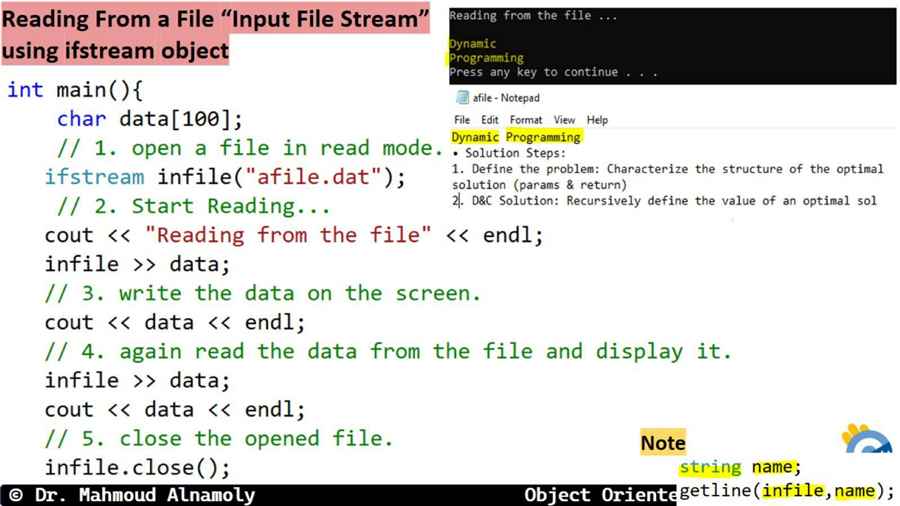
Slide 11: كود الكتابة في ملف (Writing to a File)
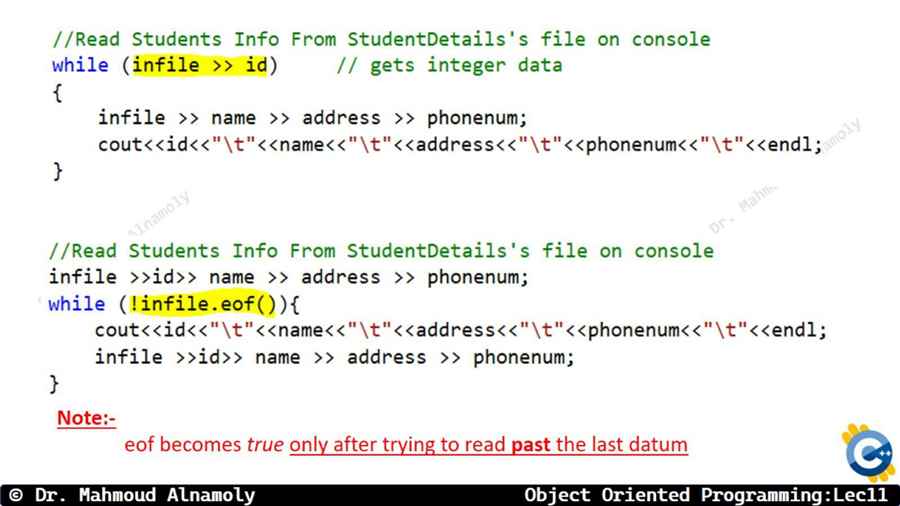
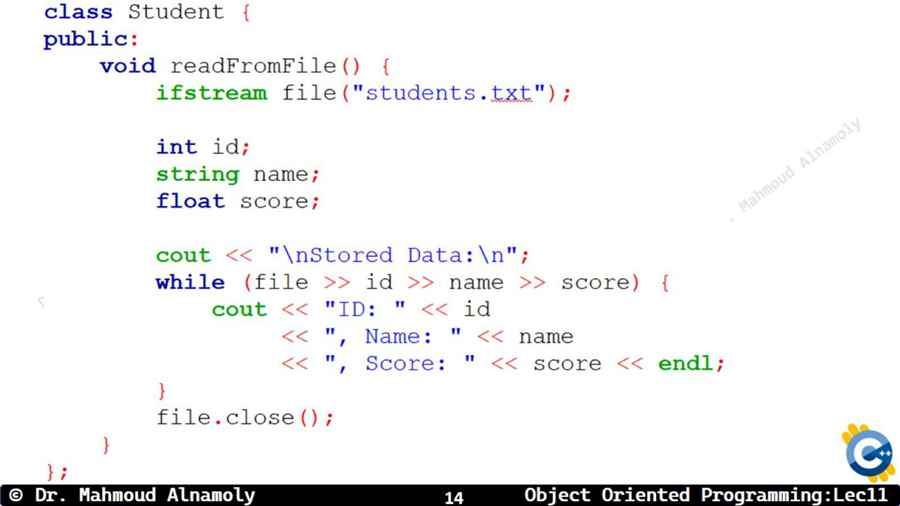
Slide 14: كود القراءة من ملف (Reading from a File)
Quiz 1: File Streams
1. Which file mode should you use if you want to write new data to the END of an existing file without deleting its current contents?
2. What is the correct class to use if you ONLY want to READ data from a file into your program?
Slide 17: معالجة الأخطاء (Exception Handling)
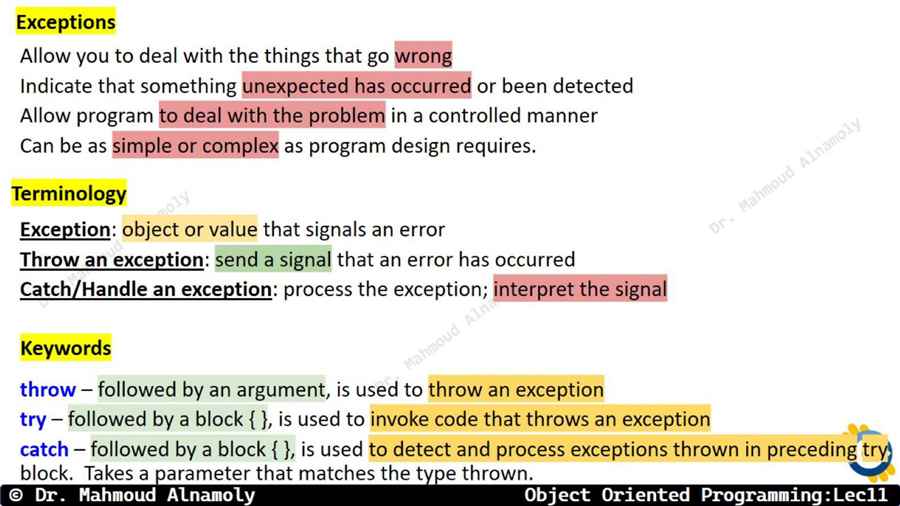
Slide 18: الكلمات المفتاحية الثلاث (Try, Throw, Catch)
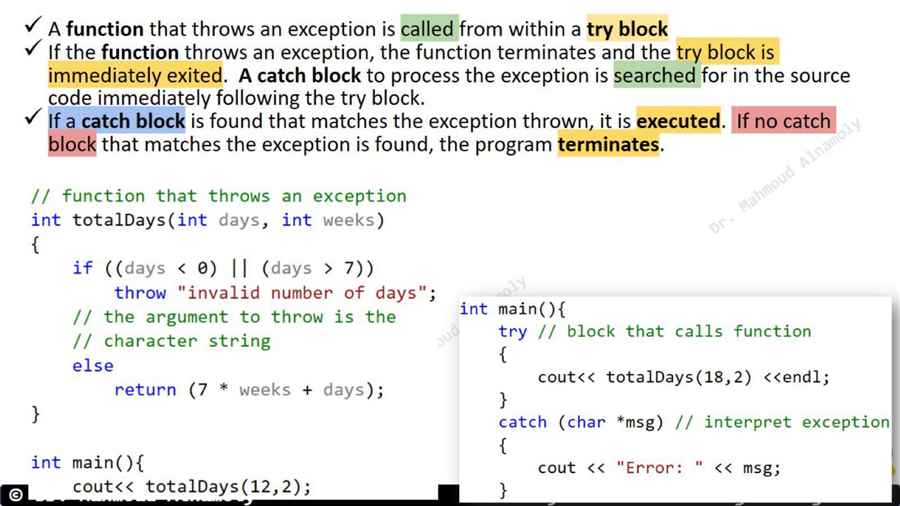
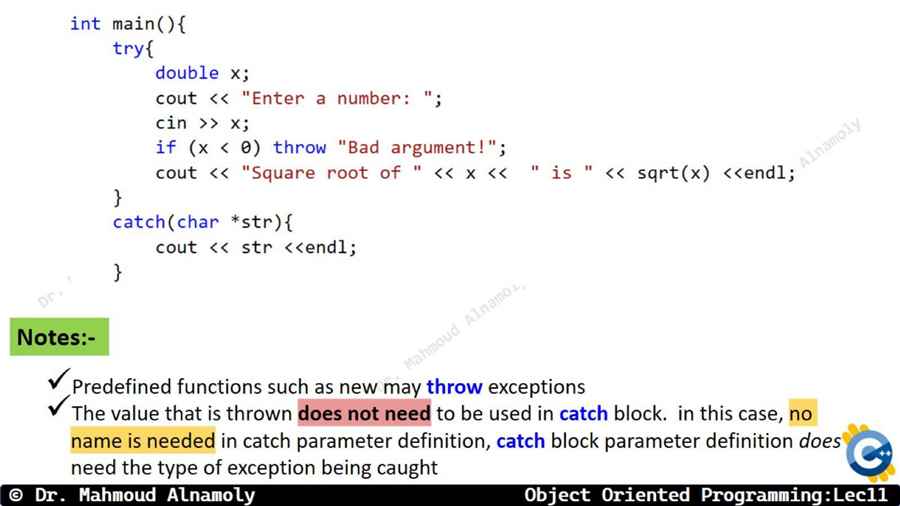
Slide 20: كود القسمة على صفر (Division by Zero Example)
Final Quiz: Exceptions
1. What is the primary purpose of the `try` block in Exception Handling?
2. What happens to the program's execution immediately after a `throw` statement is executed inside a `try` block?
الملخص الشامل لأهم التريكات (Summary & Pro Tips)
- Stream = تيار: مجرى بيانات.
cin(من الكيبورد)،cout(للشاشة). مكتبةfstreamبتضيف تيارات للملفات. - 3 كلاسات ملفات:
ofstream(كتابة فقط)،ifstream(قراءة فقط)،fstream(الاتنين). - أوضاع الفتح:
ios::out(كتابة بمسح القديم)،ios::in(قراءة)،ios::app(إلحاق من غير مسح)،ios::trunc(مسح كامل). - دايماً اعمل
.close(): عشان تضمن إن البيانات اتكتبت والملف اتقفل بأمان. - دالة
getline(): بتقرا سطر كامل (بالمسافات). بنستخدمها فيwhileloop عشان نقرا الملف كله لحد الآخر (EOF). - Exception Handling:
try(حط الكود الخطير)،throw(ارمي الخطأ)،catch(امسك الخطأ واتعامل معاه). البرنامج مبيقفلش! - Best Practice: دايماً تشيك إن الملف اتفتح صح:
if (!outFile) { ... }قبل ما تبدأ تكتب فيه.
سؤال مقالي متوقع للامتحان (Essay Question)
Question: Explain File I/O in C++ using the `fstream` library. Discuss the three main classes (`ofstream`, `ifstream`, `fstream`) and the different file opening modes. Then explain Exception Handling using `try`, `throw`, and `catch` with a practical example.
🖥️ What is the output of the following code?
Q1:
Q2:
✍️ Write a line of code for the following statements
Q1: Include the necessary library for File Input/Output operations.
Q2: Open a file named log.txt for writing in APPEND mode so previous data isn't deleted.
Q3: Write a line of code that reads an entire string containing spaces from the keyboard into a string variable fullName.
🔍 Based on the following code, answer all the following questions
a) What is the purpose of the if (!inFile) check?
b) What does the condition while (inFile >> num) do?
c) What is the direction of the stream arrows (>>) when reading from a file, and what do they point to?